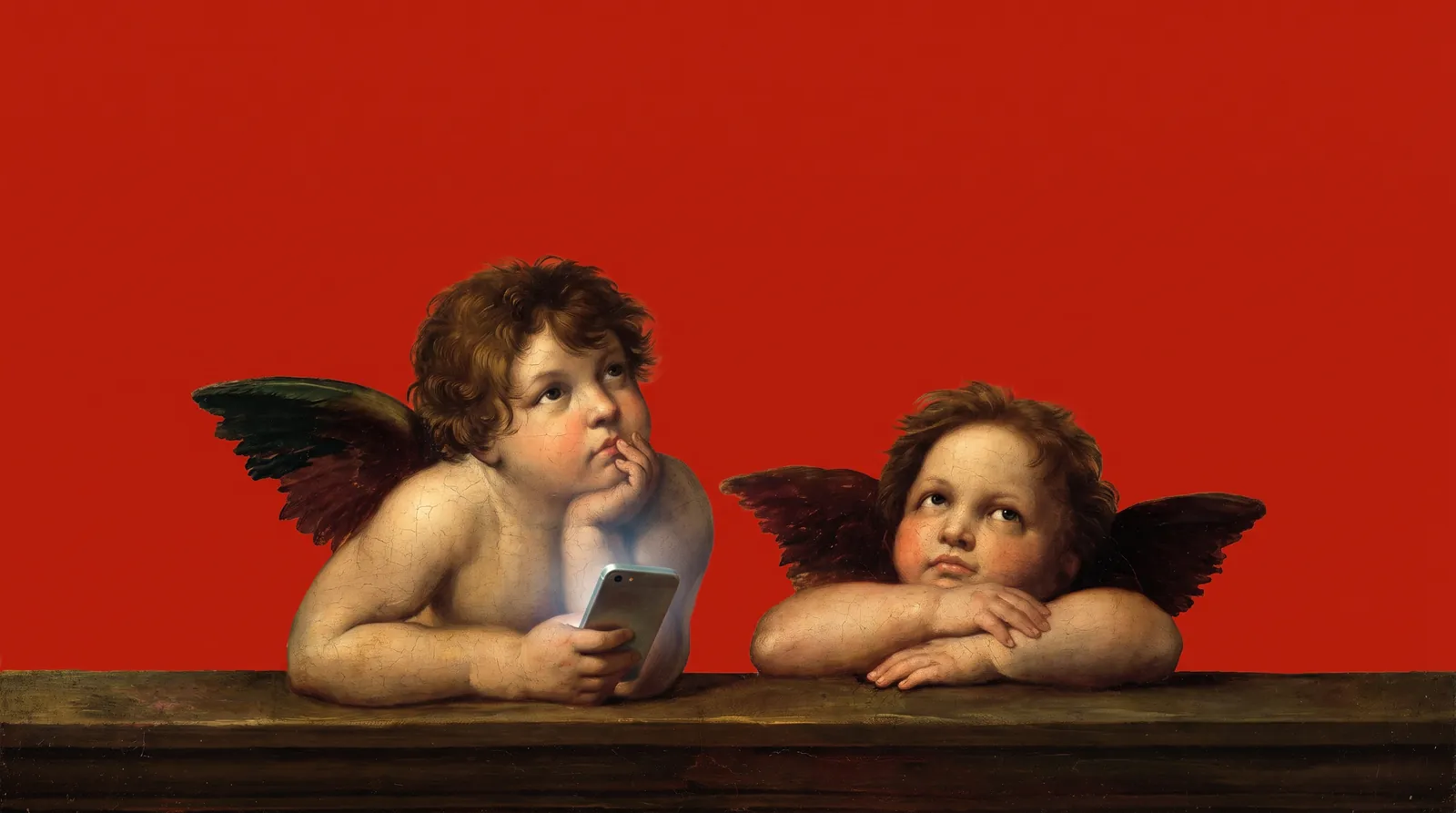
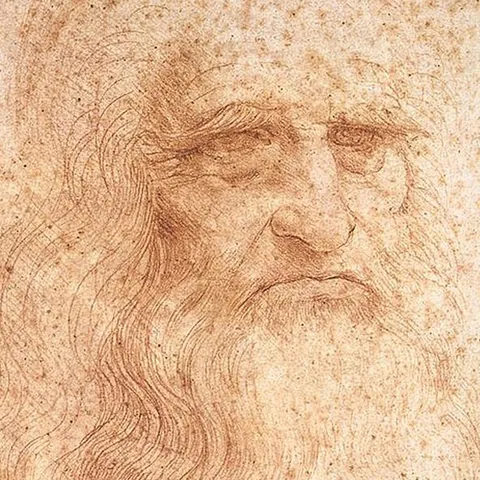
Leonardo di ser Piero da Vinci
Military engineer · Inventor · (also paints)
Florence → Milan
Apprentice in Verrocchio's workshop, Florence
Open to work: yes
Military engineering, architecture, sculpture…
Wi-Fi
Pairing complete · Adam ⇄ Creator
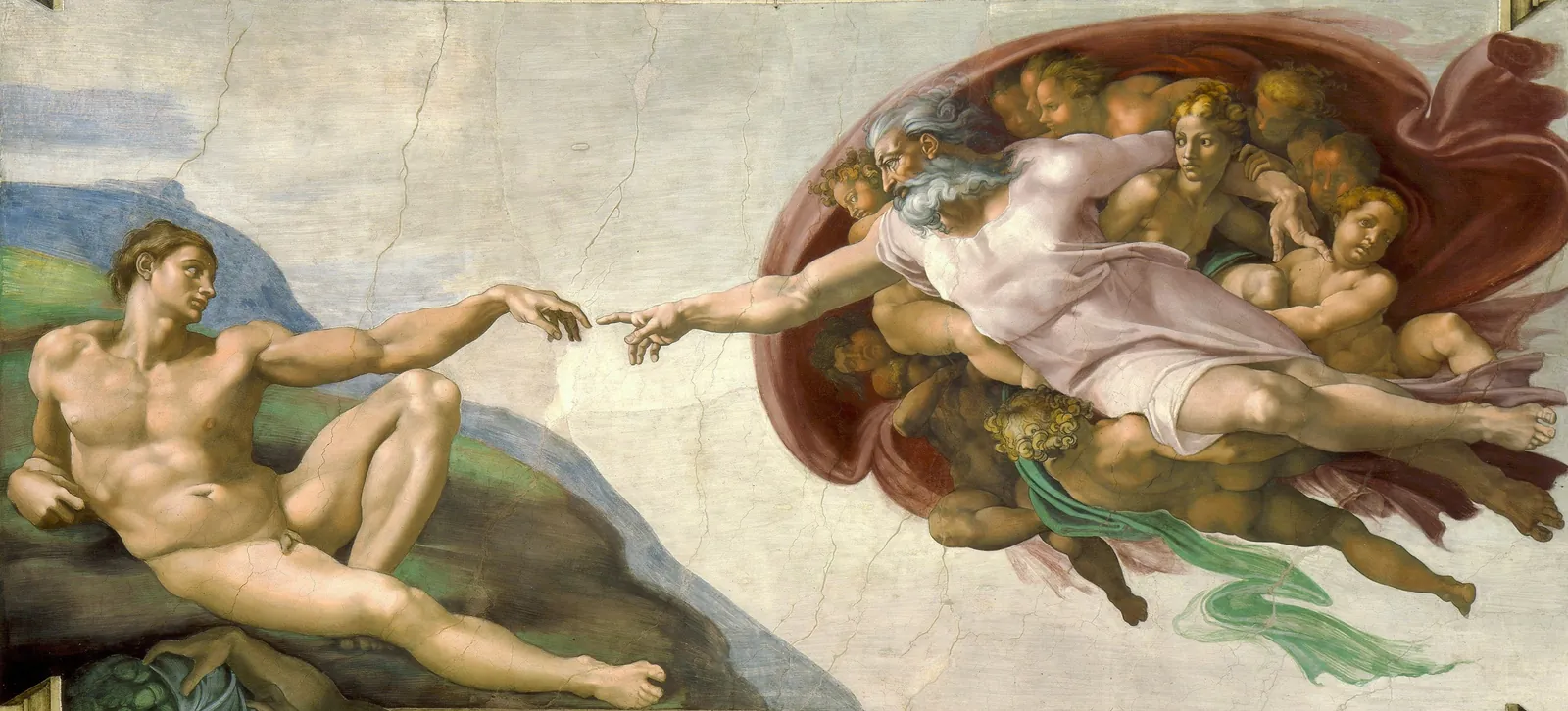
For more than 500 years, these two fingers have almost touched. Today, for a moment, there was signal.
Next stops: Florence, Milan and Rome, around 1500. No cell signal. And still, everything went viral.
The Creation of AdamMichelangeloc. 1508–1512Sistine Chapel, Vatican
Scene 02 · Florence, c. 1470
Florence, late 15th century. No Wi-Fi, no cell phones. And the highest concentration of geniuses per square meter in history.
Lorenzo de' Medici
official sponsor · 1449–1492
Before the sponsored post, there was the patron. The Medici were bankers and patrons of the arts, and their money turned into painting, sculpture and architecture.
Lorenzo de' Medici, the Magnificent (1449–1492), supported Botticelli and took the young Michelangelo into the family palace. Talent curation before algorithms existed.
Leonardo was an apprentice in Verrocchio's workshop, right here in Florence. Tutorials were live only, next to the master.
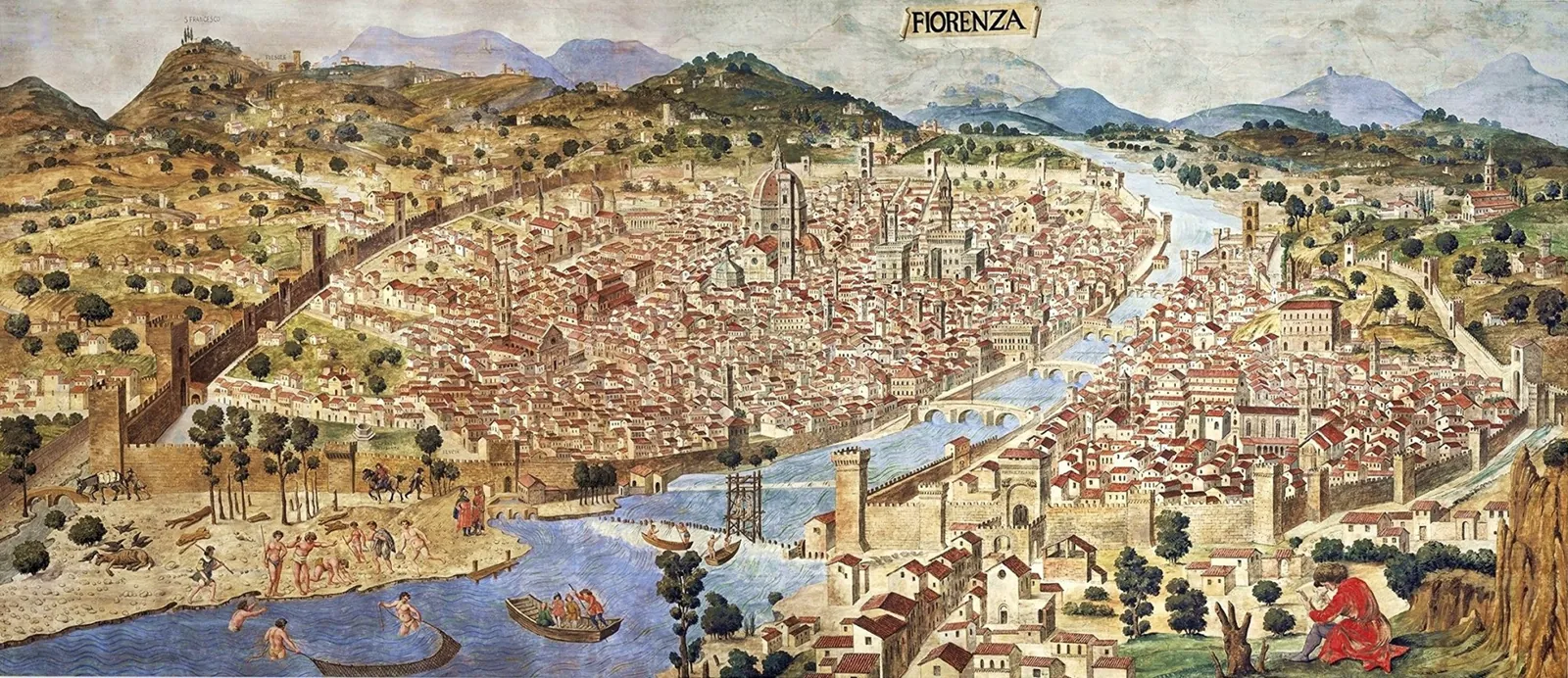
Illustration in the style of a map app: the search “workshop near me” shows Verrocchio's Workshop, where Leonardo was an apprentice, and Botticelli's Workshop, backed by the Medici. The pins mark the Duomo, the Palazzo Vecchio, the Ponte Vecchio and the Arno river; the “you are here” dot sits on the draftsman who drew the view.
Scene 03 · Florence → Milan, c. 1482
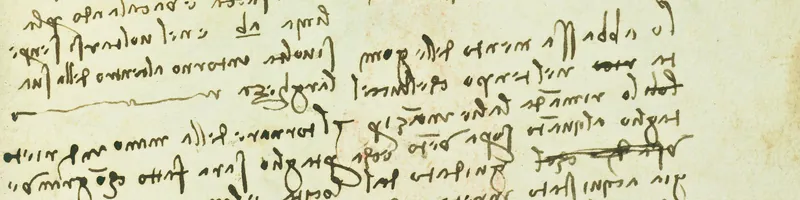
Around 1482, Leonardo wrote to Ludovico Sforza, who ruled Milan, offering his services. The draft survived in the Codex Atlanticus.
He was about 30 and had a list of skills. Almost all of them for war.
Military engineer · Inventor · (also paints)
Florence → Milan
Apprentice in Verrocchio's workshop, Florence
Open to work: yes
Military engineering, architecture, sculpture…
Source: letter to Ludovico Sforza, lord of Milan · c. 1482
…and also painting.
As well as anyone else.
Summary of the letter, in roughly its original order. The draft is in the Codex Atlanticus (Biblioteca Ambrosiana, Milan).
Result
Leonardo moved to Milan around 1482 and stayed until 1499. He designed, invented and even ran the court's parties.
But the most famous work of that stint was neither a bridge nor a cannon. It was a painting: The Last Supper (1495–1498).
The notebooks
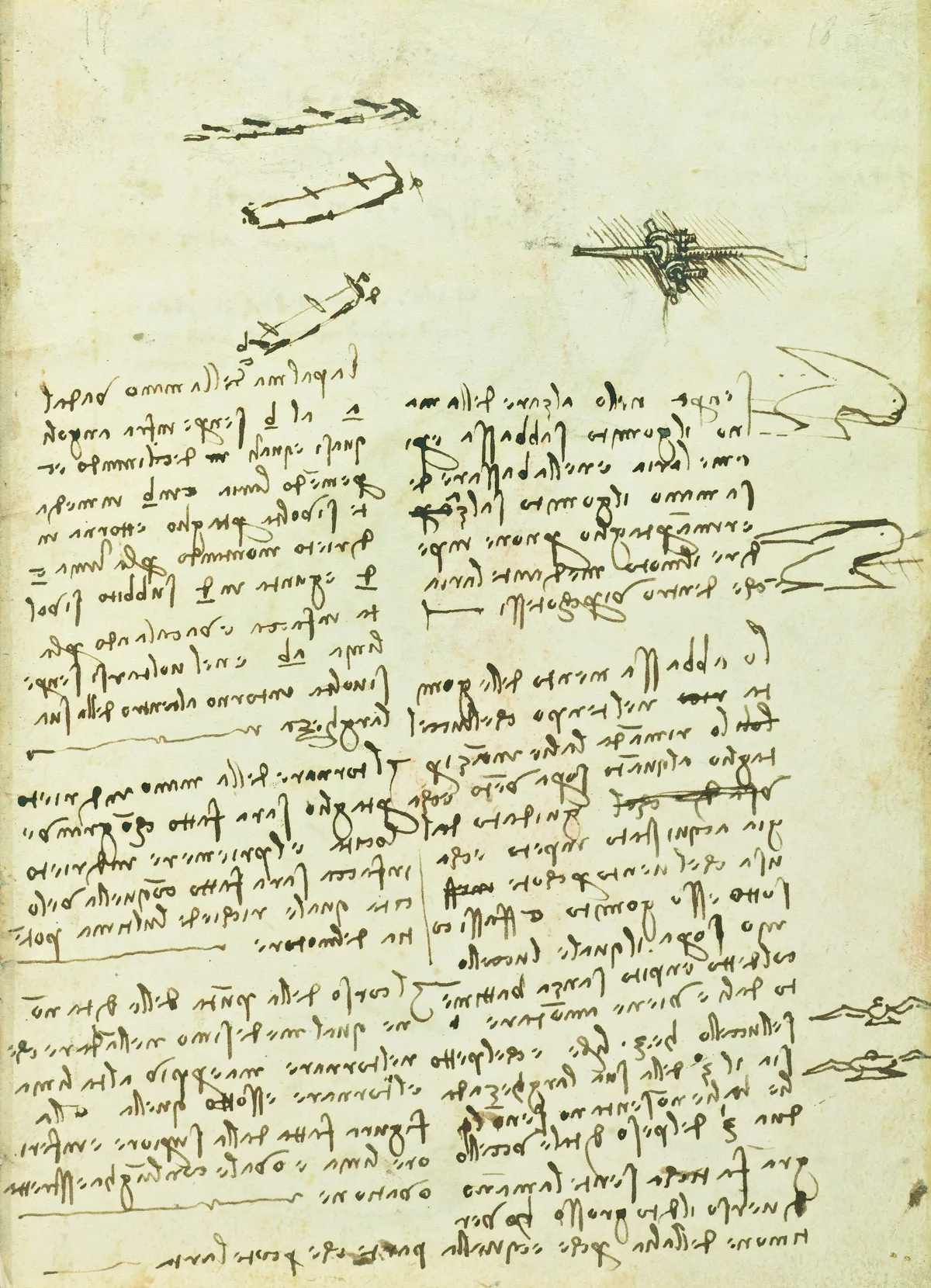
Left-handed, Leonardo wrote in mirror script, from right to left. To read it, you need a mirror. Or this button.Or just scroll.
Or hover over the page. Or tap the page.
Prototypes
prototype · status: in beta for 500 years
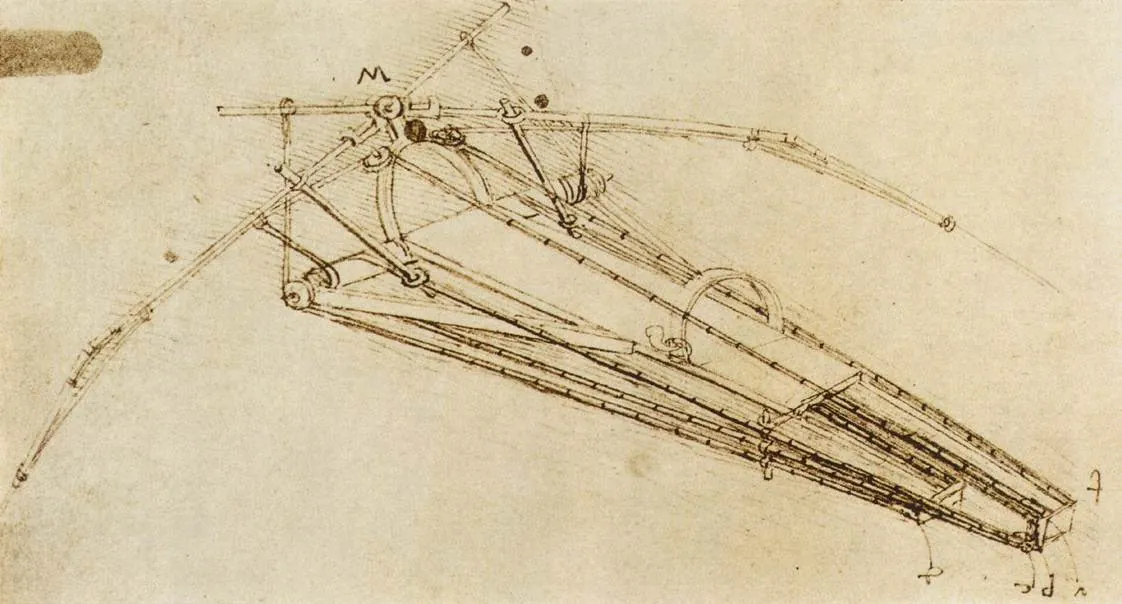
Leonardo drew flying machines some 400 years before the first airplane.
Measurement
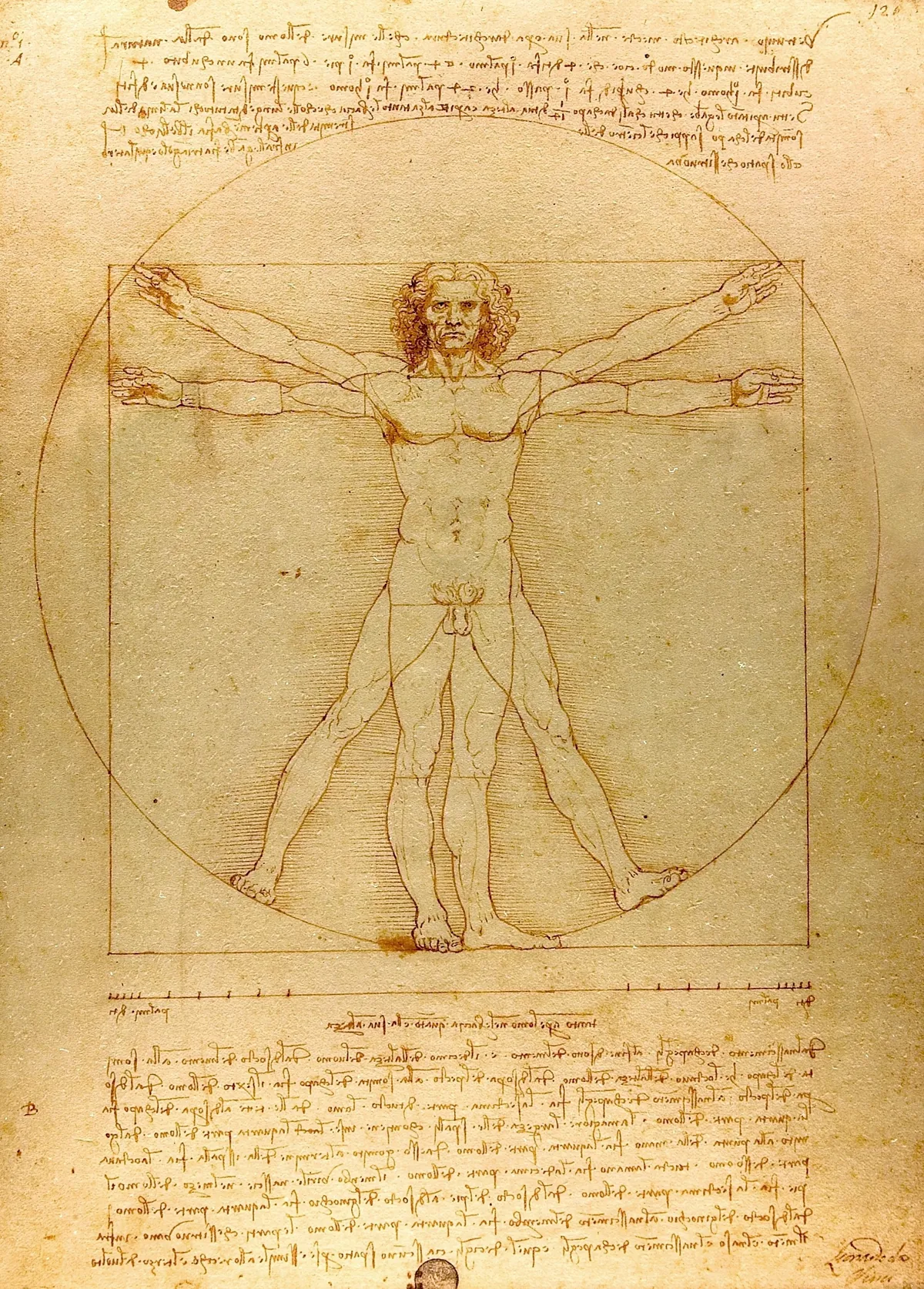
height ÷ arm span 1.0000
The AI measured it and confirmed: with arms outstretched, the arm span equals the height. Vitruvius wrote this rule in the 1st century BC; Leonardo drew it c. 1490.
Scene 04 · Botticelli, c. 1484–1486
Zephyr, the west wind, blows Venus to the shore. The Hora of Spring is already waiting with the cloak. Legend has it that the model was Simonetta Vespucci.
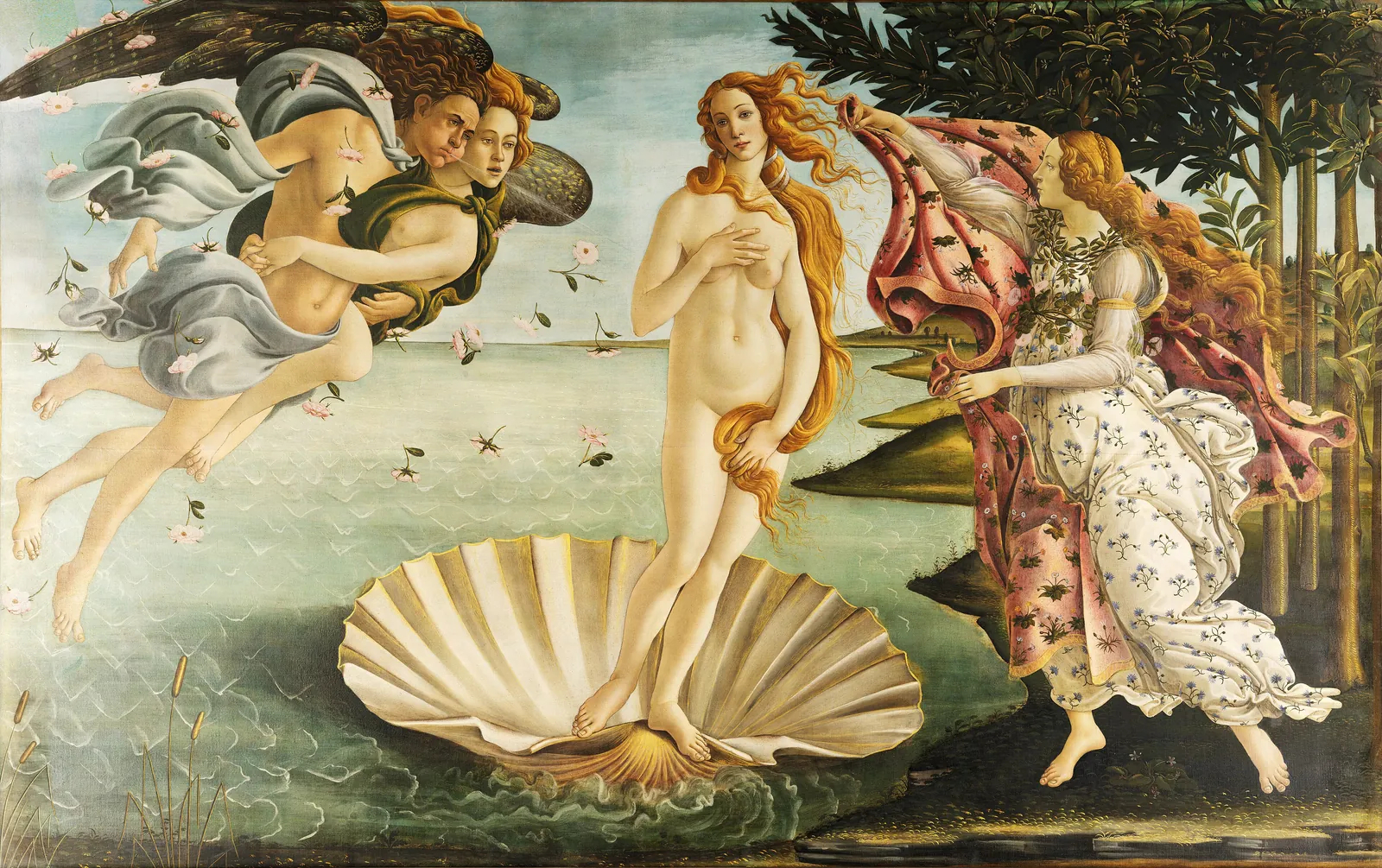
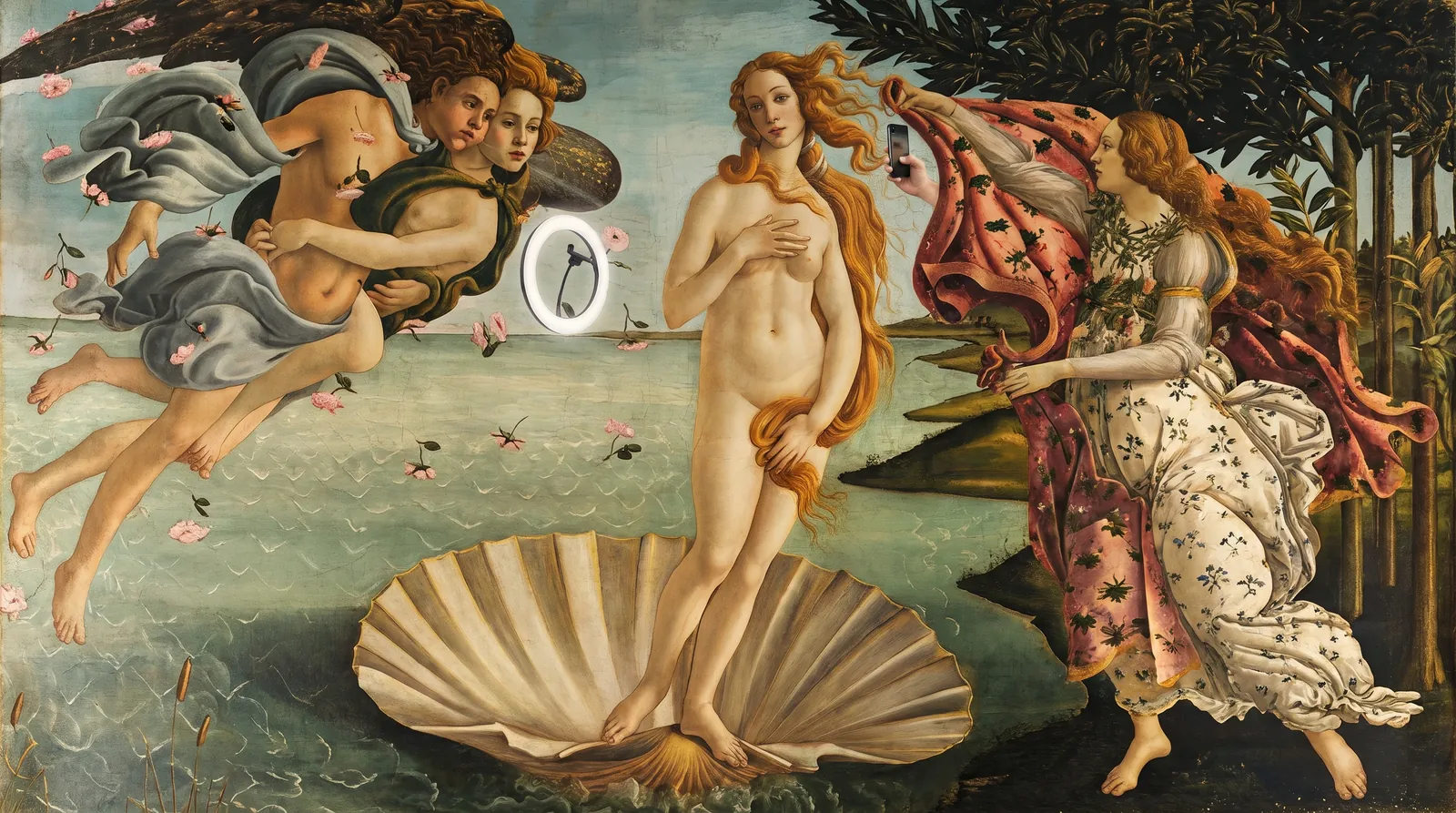
2026 version generated with AI from the artwork
@venus
Uffizi, Florence
venus just arrived. no filter, just tempera 🐚
zephyr did I blow too hard?
hora.of.spring girl, put this on
sandro.botticelli photo credit?
simonetta.vespucci legend says it's me
michelangelo is typing…
The Birth of VenusSandro Botticellic. 1484–1486Tempera on canvasGalleria degli Uffizi, Florence2026 version generated with AI from the artwork
Scene 05 · Florence, 1503
Florence, 1503. According to Vasari, a merchant commissioned Leonardo to paint his wife's portrait. It seemed like a simple request.
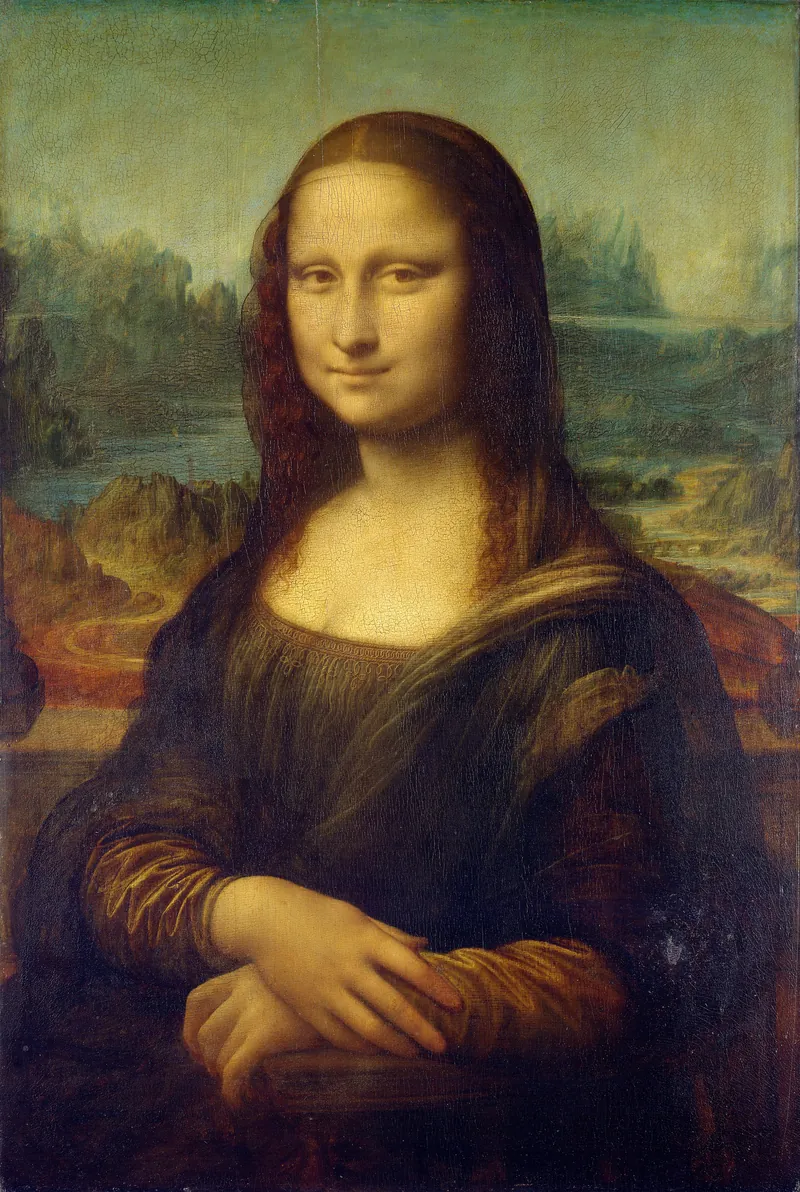
Mona LisaLeonardo da Vincic. 1503–1519Louvre Museum, Paris
The 2026 version, with wireless earbuds and iced coffee, was generated with AI from the artwork.
In 2005, researchers from the University of Amsterdam and the University of Illinois ran her face through emotion-recognition software. The most debated smile in art, finally, in numbers.
01 · Face ID
face found · eyebrows: 0
Verdict: happy. With reservations.
The client was Francesco del Giocondo, a Florentine silk merchant. Leonardo never delivered: he took the painting to France and kept retouching it until shortly before his death, in 1519.
02 · Commission
Francesco del Giocondoclient · Florence
Retouching99%
Deliverynever
On August 21, 1911, she vanished from the Louvre. The thief, Vincenzo Peruggia, worked at the museum. The disappearance turned her into the most famous painting in the world.
03 · 1911
Trending in Paris
December 1913 · found in Florence
Five centuries later, she's still at the Louvre, with no delivery date. What if the portrait were commissioned today?
Mona Lisa 2026
What's new: wireless earbuds and iced coffee.
Scene 06 · Sistine Chapel, Vatican, 1509
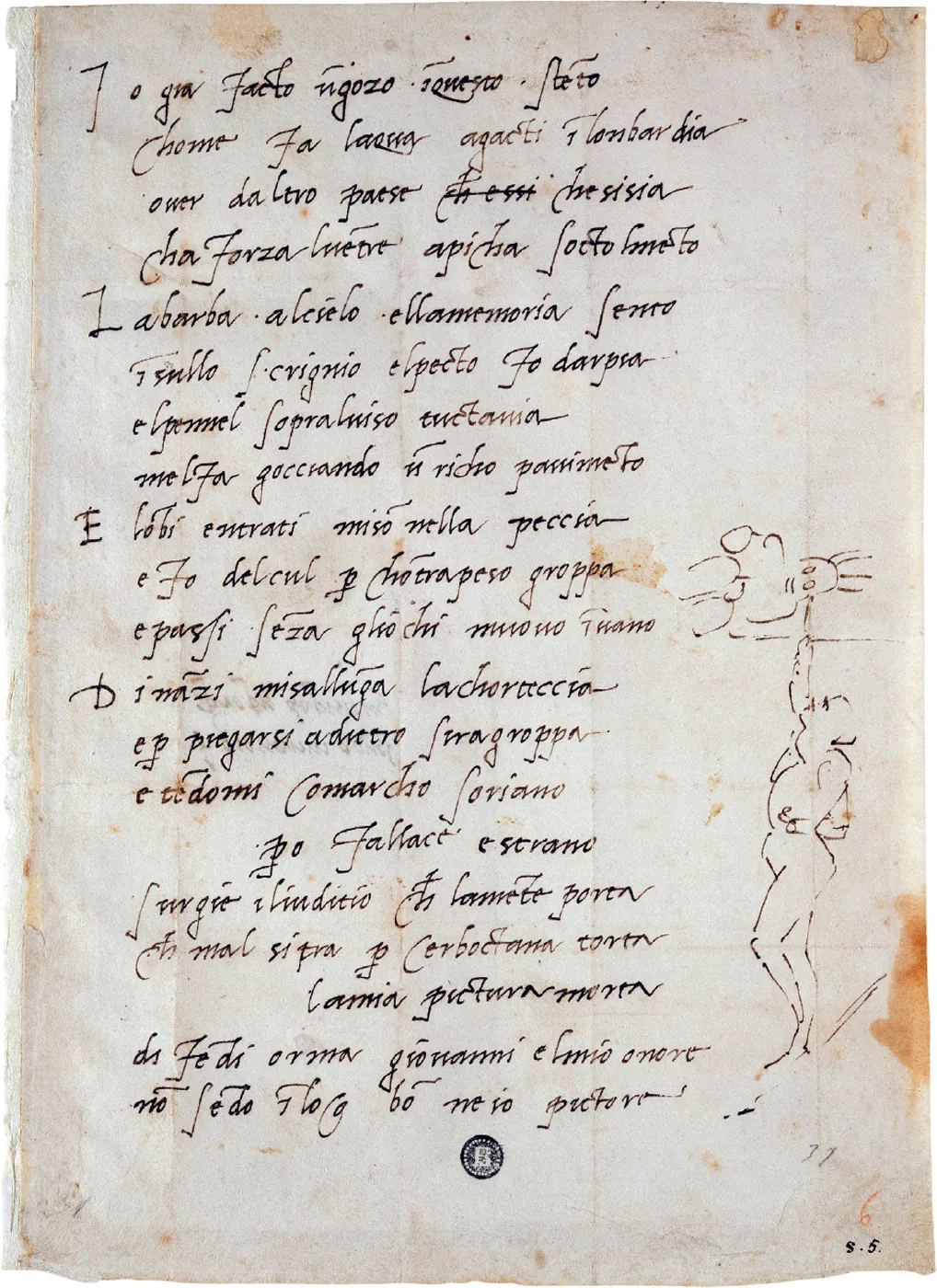
While painting the ceiling of the Sistine Chapel, Michelangelo sent his friend Giovanni da Pistoia a sonnet complaining about the job. And drew himself in the margin.
Fun fact: he saw himself as a sculptor, not a painter. The ceiling took four years, from 1508 to 1512.
Michelangelo Buonarroti sculptor
@buonarroti · Sistine Chapel, Vatican · 1509
to Giovanni da Pistoia
I' ho già fatto un gozzo in questo stento
La barba al cielo
e 'l pennel sopra 'l viso tuttavia
mel fa, gocciando, un ricco pavimento
non sendo in loco bon, né io pittore
I've already grown a goiter from this toil
My beard points to the sky
and the brush, forever above my face,
dripping, turns it into a colorful floor
I'm not in a good place, and I'm no painter
Translated from Italian ·
1509 · sent from the scaffolding
giovanni.dapistoia hang in there, buddy. Only about three years to go.
pope.julius.ii so when's the ceiling coming out?
Look at the margin: he paints standing up, head thrown back. Painting while lying on his back is a myth.
Scene 07 · Vatican, Rome, 1511
Raphael gathered on a Vatican wall thinkers who lived centuries apart. High ceilings, lots of talk, nobody in the same time zone.
The School of AthensRaphael1509–1511Stanza della Segnatura, Vatican

Pythagoras
taking the meeting minutes
Writing nonstop in a book while a student holds up a slate for him.
Socrates
the meeting that could have been an email
Counting arguments on his fingers. He left nothing in writing: what we know of him came from his students.
Heraclitus
focus mode
Alone, leaning on a block, writing. It's believed to be a portrait of Michelangelo, added later. Yes, the one with the rant.
Plato
already used the cloud
Pointing upward, where ideas live. His face is believed to be Leonardo da Vinci's. Yes, the one with the résumé.
Aristotle
prefers a local server
His open palm points down: to the world we can observe from here.
Diogenes
status: away
Sprawled on the steps, ignoring everyone. Tradition says he lived in a jar.
Euclid
drawing the wireframe
Compass on the slate, students all around. He's believed to have the face of Bramante, the architect.
Ptolemy and Zoroaster
the first Google Earth
Ptolemy, with his back to us, holds the terrestrial globe. Zoroaster, facing us, holds the starry sky.
Raphael
looking at the camera: the first selfie
On the right edge, in a dark beret, looking out of the frame. It's the painter's own self-portrait.
Scene 08 · Signal lost
with love, the Renaissance
No feed, no likes, no Wi-Fi. And for five centuries, nobody has been able to stop looking.